
Being Half Right
Your biology is making you poor. Why successful investing demands that you defy two million years of survival instincts.
March 2, 2026 -
Shane Hull
Investing is difficult. Some say it can’t be learned; it’s in the blood. It can be learned, but it’s against human nature. Your biology is actively trying to make you poor.
The Math of Losing
Most investors focus on being “right.” They want a high hit rate. The math says that’s a trap.
Consider two investors:
- Investor A is right 70% of the time. But his wins are $10 and his losses are $30. He is a “winner” who goes broke.
- Investor B is right only 30% of the time. But her wins are $100 and her losses are $10. She is a “loser” who gets rich.
According to research by Essentia Analytics, only about 20% of professional portfolio managers have a “hit rate” above 50%. The “most-right” manager in their study was only accurate 55% of the time.
The pros aren’t better at predicting the future; they are just better at failing.
The secret lies in asymmetry:
- Cut your losses. (Cap the downside)
- Let your winners run. (Uncap the upside)
Your upside is theoretically infinite. Your downside is capped. On a spreadsheet, this is easy. In your brain, it’s a nightmare.
The Biological Trap
Being wrong is against our instincts. We don’t like to lose. We’d much rather hold on to a loss in the hopes it becomes a winner. This is a guaranteed way to lose more.
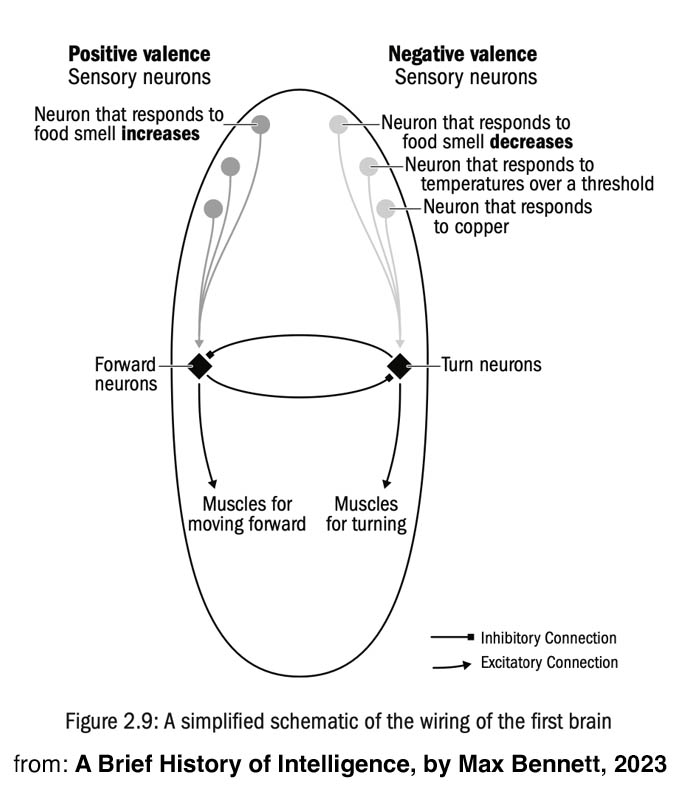
Evolution programmed us this way for a reason. To survive in the wild, you needed a high “hit rate” on reality. If you were wrong about the rustle in the grass, you were eaten. Your brain developed a panic button called negative valence. A physical, gut-wrenching aversion to pain.
Daniel Kahneman and Amos Tversky called this “Loss Aversion.” They showed that the pain of losing $1,000 is twice as powerful as the joy of gaining $1,000.
In the woods, that 2:1 ratio kept you alive. In the market, avoiding the “pain” of a small loss usually leads to a much larger one. Your ancestors survived because they were afraid to be wrong. You will go broke for the exact same reason.
Fighting Evolution
Your DNA is working against your account balance. The legendary Everett Klipp had the solution: “You have to love to lose.”
Klipp knew that if you wait until a loss “feels” right to cut, it’s already too late. You have to override your 2-million-year-old hardware:
-
Use “Checklist Logic”
Don’t trust your gut. Your gut is a coward that wants to avoid pain. Build a mechanical checklist for selling, a “Kill Criteria.” If the thesis breaks down, you sell. No thinking. No “feeling.”
-
Practice Negative Visualisation
The Stoic philosopher Seneca taught the Premeditatio Malorum: imagining the worst-case scenario before it happens. Assume the stock goes to zero. If you can’t stomach that image, you aren’t diversified enough.
-
Reframe the Loss
When a loss comes your way, don’t call it a “loss.” Call it “the cost of admission.” You don’t get angry when you pay for a movie ticket; so don’t get angry when a stock goes to 0. It’s just the price of being in the game.
-
Invert the Goal
Instead of trying to “be right,” try to “not be stupid.” It is much easier to identify a bad company than it is to predict a trillion-dollar winner.
The Hard Truth
Mastering this is an act of war against your own nature.
Cutting a loss while your brain screams “No!” is an irrational act. You are attempting to suppress two million years of survival instincts. It is deliberate pain. It requires deliberate practice.
Most people can’t do it. They are rational.
“The only definition of rationality that I’ve found that is practically, empirically, and mathematically rigorous is the following: what is rational is that which allows for survival.”
— Nassim Nicholas Taleb